Is restory: chill electronics repairs worth it?
Value and price

Source: Steam
At $17.99, ReStory: Chill Electronics Repairs sits in the same range as most cozy simulation releases, but the real question is how much game you get for that money. Developed by Mandragora and published by tinyBuild, the game released on Aug 6, 2026 as a complete package, not an early access title, so the price tag buys the full experience with no hesitation needed.
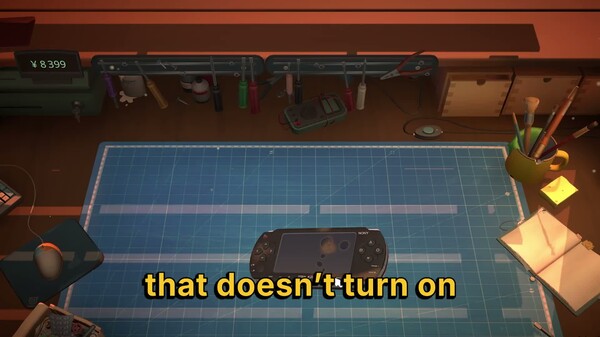
That price includes a shop-running sim set in mid-2000s Tokyo where you restore video game consoles, cell phones, and music players. The loop is broader than many repair sims at this price point: cleaning caked-on dirt, soldering broken parts, painting custom orders, reprogramming devices, and entering assembly competitions around Akiba. That variety matters because it stretches the content well beyond a single repetitive minigame.
What supports the value:
50 Steam achievements that push you from the first repair to long-term goals like earning 1,000,000 yen and playing through 365 days.
Email order system that adds a second income stream alongside walk-in customers, with achievements for completing 25 and 100 orders.
License progression that unlocks higher-tier work and includes achievements like Golden Partner and Platinum Partner.
Steam Trading Cards, Steam Cloud saves, and controller support included in the base package.
Compared to other repair or shop management sims on Steam, $17.99 is a mid-range entry. The main risk is not the price itself, but whether the chill pacing and customer-story format clicks with you before repetition sets in.
Pros
The game's biggest strength is how it layers nostalgia onto the repair loop. Restoring iconic late-90s and mid-2000s devices is the core fantasy, and the game commits to it with dirty components, cracked shells, and the satisfying moment when a cleaned and reassembled device powers on.
Relaxing pace
most repairs have no hard timers, and the
Zen point system rewards careful, unhurried work.
Customer stories with consequences
decisions like helping a child out for free (the Origami achievement) tie your choices to the narrative and shop reputation.
Varied repair actions
cleaning, soldering, painting, and reprogramming keep the daily loop from becoming one repetitive minigame.
Tangible workshop upgrades
buying a professional screwdriver, an automatic ultrasonic bath, and a shredder for broken parts gives you clear milestones.
Strong completionist content
challenges like "Earn more than 100,000 yen in a single day" and "Play through 365 days" give long-term goals beyond casual play.
Cozy customization
buying items to make the workshop more comfortable fits the atmosphere and unlocks the Cozy! achievement.
If you plan to chase all 50 achievements, read the list before you start. Achievements like "Frugal" (no new parts for 10 days) and "Akiba never sleeps!" (7 days without ending the workday) are much easier to plan for if you know about them during your first week of play.
Cons
The biggest limitation is the solo-only design. There is no co-op and no multiplayer, so the entire experience is single-player. If you were hoping to run the shop with a friend, this is not that game.
Repetition risk
the loop of cleaning, repairing, and selling is satisfying early, but the mid-game can drag if you do not engage with email orders or assembly competitions.
Front-loaded money pressure
the Bankrupt achievement ("Get an overdue bill warning") confirms that early expenses can spiral if you overbuy parts or devices before your workshop is efficient.
Assembly competitions add pressure
winning in Akiba requires mastering each device type, which can feel stressful in a game that otherwise markets itself as chill.
No demo to test the loop
you cannot try before you buy, so the $17.99 is a blind commitment unless you already know you like this genre.
Players who want constant action will also find the customer conversations and email order pacing slow. That is part of the charm, but it is the most common reason people bounce off cozy sims.
Verdict
ReStory: Chill Electronics Repairs is an easy recommendation at $17.99 if you want a calm, single-player repair sim with a nostalgic mid-2000s Tokyo setting. The full release includes more systems than the price suggests, and the achievement list plus 365-day playthrough goal gives you a clear reason to keep the shop open.
Worth it if:
You enjoy cozy simulation games and want a setting that is rarely explored in the genre.
You like repair fantasies and want cleaning, soldering, painting, and reprogramming in a single package.
You play alone and do not need co-op or multiplayer features.
You are a completionist who will chase all 50 achievements and the endgame license unlocks.
Wait if:
You expect co-op shop management, because the game is strictly single-player.
You need to try a demo before spending, since no demo is currently available.
You dislike slow, story-driven sims without faster gameplay systems to break up the routine.
At this price, you are buying a complete single-player sim with 50 achievements and no early access caveats. For most cozy-sim fans, that is a comfortable yes; for anyone on the fence, wait for a sale if you are not sure the chill loop will hold you.
The game allows you to immerse yourself in nostalgic times, touch the devices of the past and see how they work. Definitely for me personally, YES!